


The Cloud Gaming Race Is Heating Up
For years, cloud gaming felt like a promising idea that never quite delivered on its potential. Latency issues, limited game libraries, and inconsistent streaming quality kept it from becoming mainstream. But in 2024 and beyond, things are changing rapidly. Microsoft and Amazon are both making significant moves in the cloud gaming space, and their new offerings could genuinely shift how people think about playing games without dedicated hardware.
These two companies bring very different strengths to the table. Microsoft has decades of gaming experience through Xbox, while Amazon has the raw infrastructure power of AWS behind it. Together, their competing visions are pushing the entire industry forward.
What Microsoft Is Bringing to Cloud Gaming
Microsoft has been building its cloud gaming strategy around Xbox Game Pass Ultimate for several years now. The service already allows subscribers to stream a large catalog of games directly to phones, tablets, and browsers without needing a console. But recent announcements suggest the company is ready to take things further.
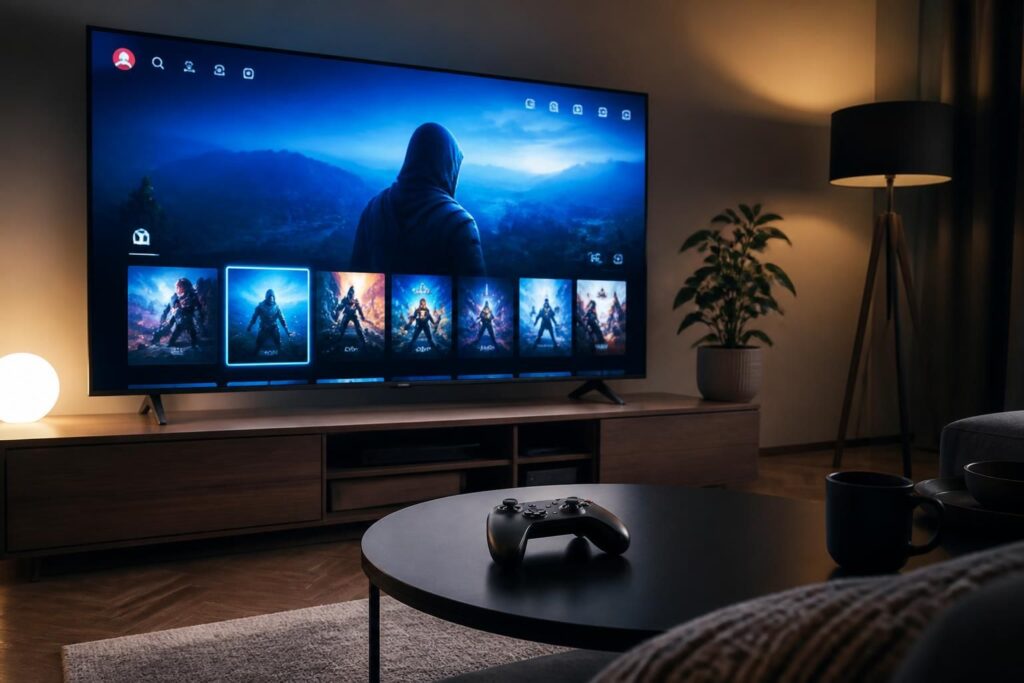
One of the most notable developments is Microsoft’s push to bring its cloud gaming technology to smart TVs and streaming devices. By partnering with manufacturers like Samsung and LG, Microsoft aims to make it possible to launch a game from a television without any additional hardware beyond a controller. The company is also investing heavily in reducing input lag, which has historically been the biggest complaint among cloud gaming skeptics.
Microsoft is also exploring a dedicated cloud gaming device — a low-cost streaming stick that would function similarly to a Chromecast or Amazon Fire Stick, but optimized entirely for gaming. This would allow players to access the full Xbox library on any screen in their home at a fraction of the cost of a traditional console.
“Our vision is that anyone, anywhere, should be able to play the games they love on any screen they choose.” — Phil Spencer, Head of Microsoft Gaming
Amazon’s Approach: Luna Gets a Serious Upgrade
Amazon entered the cloud gaming market with Amazon Luna in 2020, but the service struggled to gain significant traction against established players. Now, Amazon appears to be doubling down on its investment with a series of meaningful upgrades.
The company is leveraging its AWS infrastructure to offer lower-latency streaming, particularly for users already embedded in the Amazon ecosystem. Luna is being integrated more tightly with Prime Gaming, giving subscribers access to an expanded rotating library of titles as part of their existing Prime membership. This bundling strategy could be a game-changer for casual players who don’t want to pay a separate subscription fee.
Amazon is also reportedly working on improved controller technology and better mobile integration, making Luna a more compelling option for on-the-go gaming. The company’s global data center network gives it a geographic advantage in regions where competitors have fewer servers, potentially offering a better experience in markets that have been underserved by cloud gaming platforms.
How These Services Compare to the Competition
Microsoft and Amazon aren’t operating in a vacuum. NVIDIA GeForce Now and Sony’s PlayStation Cloud offerings are also competing for the same audience. Here’s how the current landscape breaks down:
- Xbox Cloud Gaming: Deep game library, strong console integration, aggressive hardware partnerships
- Amazon Luna: Prime bundle appeal, AWS-backed infrastructure, growing game selection
- NVIDIA GeForce Now: Superior graphics fidelity, supports games you already own on Steam
- PlayStation Remote Play / PS Cloud: Ideal for existing PlayStation ecosystem users
Each platform has its own strengths, and the reality is that most serious gamers may end up using more than one depending on the situation. The competition is ultimately good for consumers, as it drives down prices and forces each company to improve quality.
The Technical Challenges That Still Need Solving
Despite all the enthusiasm, cloud gaming still faces real technical hurdles. Network latency remains the most critical issue — even a delay of 50 to 80 milliseconds can make fast-paced games feel unresponsive. Both Microsoft and Amazon are investing in edge computing solutions to bring servers physically closer to players, but this takes time and enormous capital investment.
Bandwidth requirements are also a concern. Streaming a game at 1080p60 typically requires a stable connection of at least 15 to 25 Mbps, and 4K streaming demands considerably more. In regions with inconsistent broadband access, cloud gaming simply isn’t viable yet. Both companies will need to continue optimizing their compression algorithms to make the experience accessible to a broader audience.
What This Means for the Future of Gaming
The long-term implications of Microsoft and Amazon’s cloud gaming investments are significant. If these platforms succeed, they could fundamentally change the economics of the gaming industry. Players would no longer need to spend hundreds of dollars on new hardware every few years. Developers might design games with streaming-first architectures in mind. And the barrier to entry for new players could drop dramatically.
That said, cloud gaming is unlikely to replace traditional consoles and PCs entirely in the near term. Hardcore gamers who demand the lowest possible latency and the highest graphical fidelity will continue to prefer local hardware. But for casual players, families, and people in emerging markets, cloud gaming represents a genuinely exciting and accessible path into interactive entertainment.
The moves being made by Microsoft and Amazon right now are laying the groundwork for a future where your gaming library lives in the cloud and follows you everywhere. Whether that future arrives in two years or ten, the infrastructure being built today will define what it looks like.