



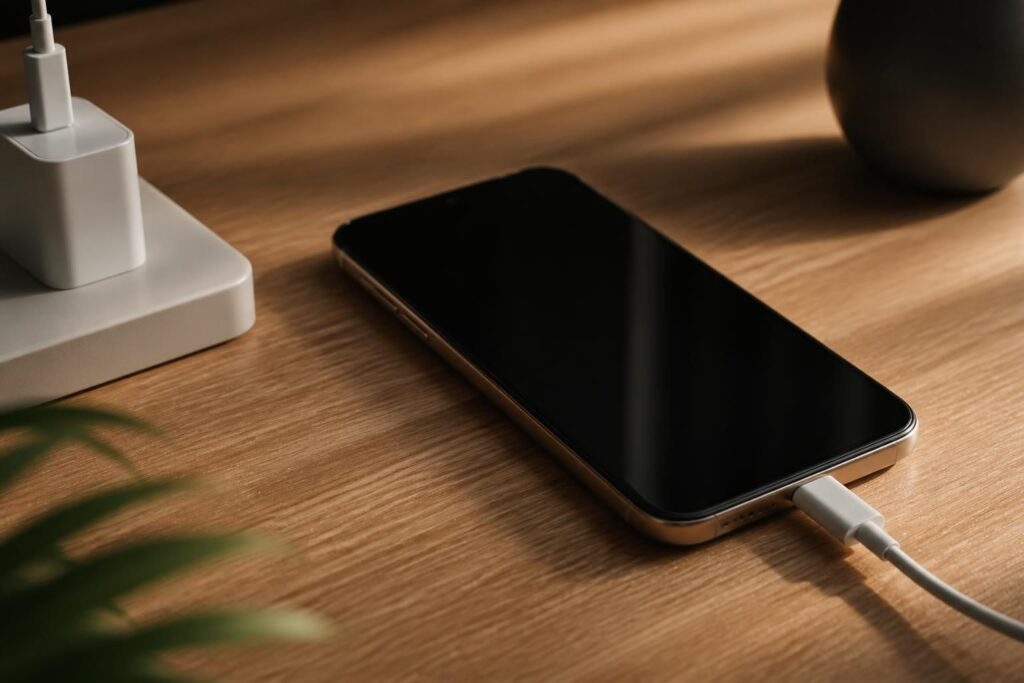
How fast charging actually works
To understand whether fast charging harms your battery, it helps to first understand what happens inside the cell when you plug in. Modern lithium-ion batteries store energy by moving lithium ions between two electrodes — an anode and a cathode — through a liquid electrolyte. Fast charging works by pushing a higher electrical current into the battery over a shorter period of time, which naturally generates more heat and places greater mechanical stress on the electrode materials.
Most fast-charging standards — such as Qualcomm Quick Charge, USB Power Delivery, or proprietary systems like OnePlus SUPERVOOC — don’t simply blast full power from 0% to 100%. Instead, they use a smart two-phase approach: charge quickly up to around 80%, then slow down significantly for the final stretch. This is not an accident. The last 20% is where the battery becomes most vulnerable to stress.
The role of heat in battery degradation
Heat is the single biggest enemy of lithium-ion battery health. When a battery charges rapidly, resistance inside the cell converts some of that electrical energy into thermal energy. Over hundreds of charge cycles, elevated temperatures accelerate a chemical process called electrolyte decomposition, which gradually reduces the battery’s capacity to hold a full charge.
“Lithium-ion batteries are not damaged by occasional fast charging, but sustained high temperatures during charging — regardless of speed — are the primary driver of long-term capacity loss.” — Battery research team, Stanford University
This is a critical distinction. It is not the speed of charging per se that degrades a battery, but the heat produced as a side effect. Many premium smartphones now include thermal management systems — dedicated chips, cooling chambers, or split-battery designs — specifically engineered to keep temperatures within safe ranges even during rapid charging sessions.
What the research and real-world data show
Independent studies and manufacturer data paint a nuanced picture. A battery charged exclusively with fast charging over two years will typically show slightly more capacity degradation than one charged slowly under identical conditions. However, the difference in practice is often smaller than people expect.
- Most modern batteries retain around 80% of their original capacity after 500 full charge cycles, whether fast or slow charging is used.
- Charging to 100% every night — regardless of speed — causes more cumulative stress than stopping at 80%.
- Leaving a phone plugged in and fully charged for long periods (known as trickle overcharge) can be more damaging than a quick fast-charge session.
- Ambient temperature matters enormously: charging in a hot car or under a pillow accelerates degradation far more than charging speed alone.
In other words, your charging habits and environment often matter more than whether you use a 15W or 65W charger.
How manufacturers are addressing the problem
Smartphone makers are well aware of the tension between user convenience and battery longevity. As a result, most flagship devices now ship with software and hardware features designed to mitigate fast-charging damage.
Adaptive charging, introduced by Google on Pixel phones and adopted widely since, learns your daily routine and slows down the final phase of charging overnight so the battery only reaches 100% just before you typically wake up. Apple’s Optimized Battery Charging works on a similar principle. These features effectively give you the speed when you need it and the gentleness when you don’t.
Some manufacturers, particularly in the Android ecosystem, have pushed charging speeds to extraordinary levels — 120W and even 240W systems exist in 2024. At these speeds, battery architecture changes significantly: cells are split into smaller units charged in parallel, which reduces heat per cell and keeps the overall temperature manageable. The result is that a 240W charger may not necessarily degrade a purpose-built battery faster than a 30W charger on a standard cell.
Practical tips to protect your battery regardless of charger speed
Whether you use a fast charger or a slow one, a few consistent habits will do more for your battery’s long-term health than the wattage on the box.
- Avoid charging your phone in very hot environments — direct sunlight, car dashboards in summer, or under bedding.
- Try to keep your battery between 20% and 80% when possible, rather than cycling from 0% to 100% repeatedly.
- Use the charger and cable provided by the manufacturer, or a certified third-party alternative, to ensure proper voltage regulation.
- Enable any built-in battery health features your phone offers, such as scheduled charging or charge limiting modes.
- Remove thick phone cases during intensive fast-charging sessions if heat buildup is noticeable.
The verdict: should you avoid fast charging?
The short answer is no — not if your device was designed to support it. Modern fast-charging technology has matured considerably, and the degradation difference between fast and slow charging on a well-engineered device is marginal over a typical two-to-three-year ownership period. The anxiety around fast charging is largely a holdover from earlier generations of lithium-ion technology, when thermal management was far less sophisticated.
That said, if you are in no particular hurry — charging overnight, for instance — using a slower charger or enabling an adaptive charging mode is a perfectly sensible choice. Your battery will thank you slightly over the long run. But switching exclusively to slow charging out of fear is unlikely to make a dramatic difference to your day-to-day experience or to how long your device remains usable.
The most important takeaway is this: how you charge matters more than how fast you charge. Keep temperatures down, avoid full cycles when possible, and let your phone’s built-in intelligence do the rest.