



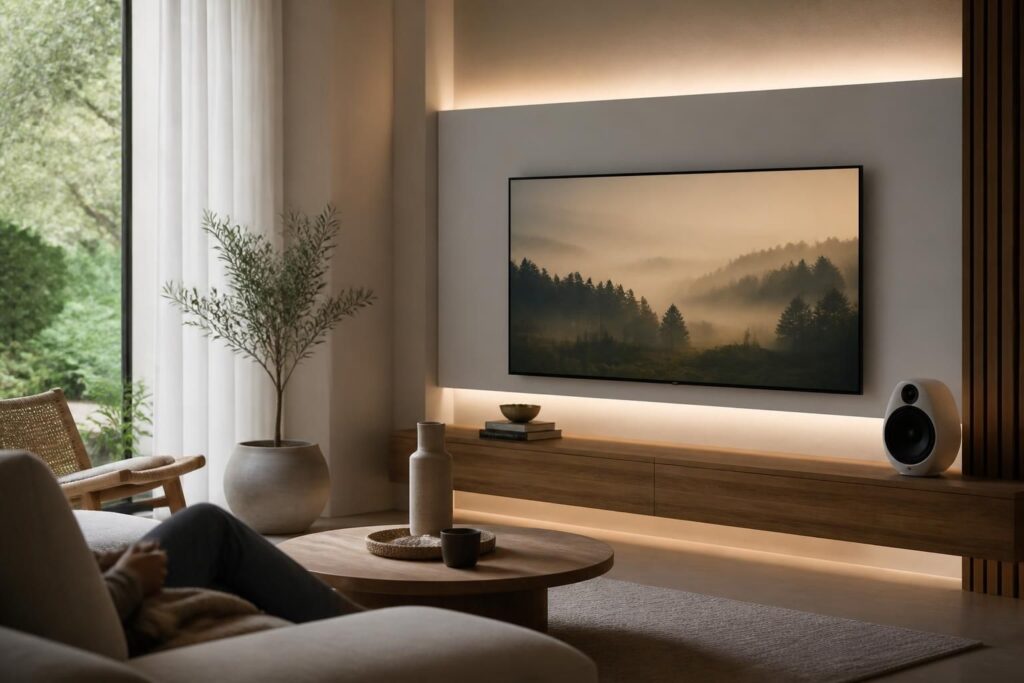
Why Design Matters in Smart Home Technology
For years, smart home gadgets had a reputation for looking utilitarian at best and downright ugly at worst. Bulky routers, plasticky sensors, and clunky hubs cluttered shelves and countertops, making homeowners choose between a connected home and a beautiful one. That trade-off is finally disappearing. A new generation of designer smart home products proves that technology can be as visually compelling as it is functionally powerful.
The shift is being driven by a growing demand from consumers who treat their homes as personal expressions of taste. Manufacturers have responded by partnering with industrial designers, architects, and even fashion houses to create devices that feel like they belong in a curated interior rather than a data center.
“The best technology is the kind you barely notice — it fits seamlessly into your life and your space.” — Yves Béhar, industrial designer
1. The Nest Learning Thermostat: Minimalism Meets Intelligence
Few smart home products have had as lasting an impact on design thinking as the Nest Learning Thermostat. Its circular stainless steel body, crisp display, and subtle ambient lighting set a benchmark when it launched and still hold up today. Beyond aesthetics, the device learns your temperature preferences over time and adjusts automatically, reducing energy consumption without any manual programming. It integrates with most major smart home ecosystems, making it a versatile centerpiece for any connected home.
2. Sonos Era 300: Spatial Audio as a Design Statement
Sonos has long understood that a speaker sitting in your living room needs to look as good as it sounds. The Era 300 takes that philosophy to a new level with its sculpted, asymmetric form designed specifically to project spatial audio in multiple directions. The soft curves and matte finish make it feel closer to a piece of sculpture than a consumer electronics device. It supports Dolby Atmos music and integrates seamlessly with streaming services, delivering an immersive listening experience without visual compromise.
3. Eve Energy Strip: Elegant Power Management
Power strips are rarely glamorous, but the Eve Energy Strip challenges that assumption with a clean, white minimalist housing that blends into modern interiors. Each outlet can be individually controlled and monitored for energy consumption through a dedicated app. Built on the Matter standard, it works natively with Apple Home, Google Home, and Amazon Alexa. For anyone serious about home energy management, it offers both function and form in equal measure.
4. Arlo Pro 5S: Security Cameras That Don’t Look Like Surveillance
Home security cameras have traditionally looked like they belong on a parking garage ceiling. The Arlo Pro 5S breaks that mold with a compact, rounded design that can be mounted discreetly on walls or ceilings without drawing unwanted attention. It offers:
- 4K HDR video with color night vision
- Integrated spotlight and siren for active deterrence
- Wire-free installation with a rechargeable battery
- AI-powered detection that distinguishes people, vehicles, and animals
- Local and cloud storage options for recorded footage
The result is a smart security solution that protects your home without turning it into a fortress.
5. Philips Hue Gradient Lightstrip: Ambient Lighting Reimagined
Lighting is one of the most powerful tools in interior design, and the Philips Hue Gradient Lightstrip gives homeowners unprecedented control over their home’s atmosphere. Unlike standard LED strips that emit a single color, the Gradient Lightstrip can display multiple colors simultaneously along its length, creating smooth transitions that shift with music, movies, or time of day. It adheres cleanly behind televisions, under cabinets, or along architectural features, remaining nearly invisible when not in use. Paired with the Hue app or a voice assistant, it transforms any room into a dynamic, mood-responsive environment.
6. Samsung Frame TV: Art When You’re Not Watching
Perhaps no smart home product has redefined a category quite like the Samsung Frame TV. When switched off — or rather, when in Art Mode — it displays curated artwork from a subscription gallery, mimicking the look of a framed canvas on your wall. The ultra-slim profile, customizable bezel options in various colors and finishes, and matte anti-glare screen make it virtually indistinguishable from a real painting at a casual glance. When you’re ready to watch, it transitions instantly to a stunning 4K QLED display. It represents the pinnacle of what happens when consumer electronics design takes interior aesthetics seriously.
How to Choose the Right Designer Smart Home Products
With so many options on the market, selecting the right devices for your home comes down to a few key considerations:
- Ecosystem compatibility: Check whether the device works with your existing smart home platform, whether that’s Apple Home, Google Home, Amazon Alexa, or the open Matter standard.
- Design coherence: Think about how the product’s color, material, and form factor will interact with your existing furniture and decor.
- Longevity of support: Choose brands with a track record of providing software updates and long-term product support.
- Privacy and data practices: Understand what data each device collects and how it is stored or shared before bringing it into your home.
Ultimately, the best smart home setup is one that feels effortless — where technology quietly enhances daily life without demanding attention or cluttering your space. The six products highlighted here each achieve that balance in their own way, proving that innovation and elegance are not mutually exclusive goals.